THE MEMBER THAT MENTORS: Q&A WITH ALLAN BELDEN, PGA
Chief Coach Officer & Co-Founder, Golf Live 2026 NEPGA Bill Strausbaugh Award Winner | “Year of the Member” Spotlight
What does the Bill Strausbaugh honor mean to you?
Being recognized for mentorship tells me the years I spent trying to give more than I received actually made a difference in the lives of fellow professionals. Knowing I’ve had that kind of impact on others means more to me than any award ever could.
What’s the first thing you focus on when a new assistant or peer joins your circle?
Figuring out what actually fits them, not what the industry says the next step should be. The golf business has evolved so much that a green-grass head professional job isn’t the right path for everyone anymore. My job is to help someone first identify their own strengths and weaknesses, then match them to a path where they and their family can actually thrive — even if that path looks nothing like mine.
How do you coach someone to successfully ask for a raise or advocate for their value?
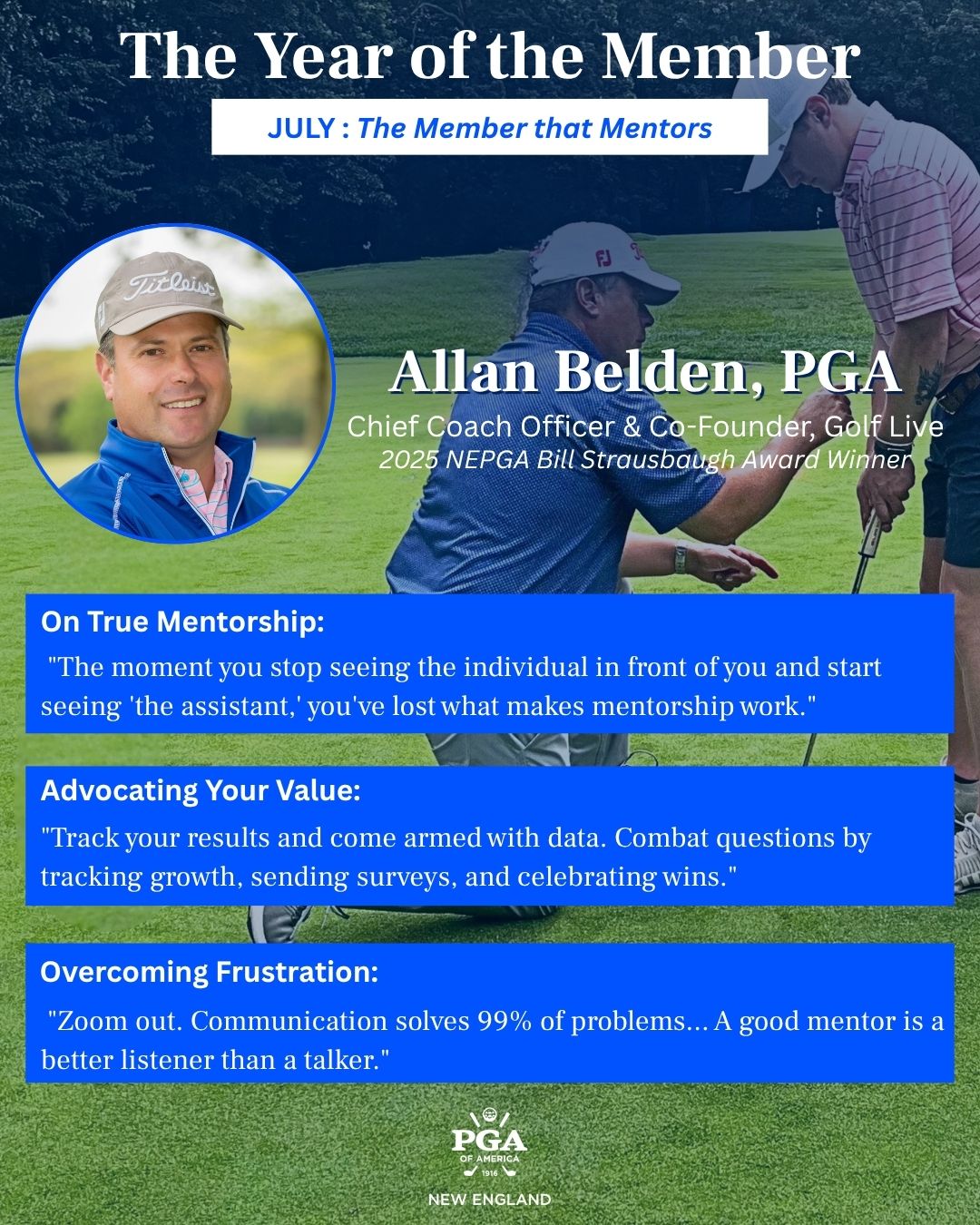
Track your results and come armed with the data. It’s easy for members and customers to sit around the club and ask, “What does the pro even do all day?” Combat that by tracking your events and growth, sending surveys that show improved satisfaction, and celebrating the wins in the club’s newsletter and on social media.
Biggest mistake people make managing or mentoring younger PGA professionals?
Losing the human element. No two professionals are alike, and mentoring isn’t a template you apply to everyone the same way. The moment you stop seeing the individual in front of you and start seeing “the assistant” or “the apprentice,” you’ve lost the thing that actually makes mentorship work.
Who was the one mentor who completely changed your trajectory?
I’ve had several, and it’s hard to name just one, but I have to give a lot of credit to Todd Sones and my current business partner, Keith Scioli. Todd is a well-respected PGA professional who made the switch from head professional at a private club to running his own business focused on teaching the game. And I credit Keith for giving me the opportunity and helping me understand the value of following your passion and not being afraid to take risks. My passion has always been coaching and helping people improve, and staying true to that has let me keep building a career in this industry doing work I love — something I might never have pursued had I not fully understood that following your passion means you get to work forever without it ever feeling like just a “job.”
When an assistant professional gets stuck or frustrated, what’s your go-to advice?
Zoom out. Ask yourself why. It’s easy to get frustrated and go negative, but if you can identify what’s truly causing the frustration, it’s rarely as big an issue as it seems. Communication can usually solve 99% of our problems, but people often don’t share what’s really going on inside them — and when they do, they’re not always heard. A good mentor is a better listener than a talker. The frustration is almost always temporary, even when it doesn’t feel that way in the moment.
Best piece of career advice you ever received?
Tough question, but I’d have to say it’s this: an idea without action is a lost opportunity, and the worst thing you can do is nothing. Being afraid to act because you’re worried about how people will view you is usually unfounded — most of what holds people back is rooted in perception rather than reality.